Oracle Cards vs Tarot: What’s the Difference (And Which Do You Actually Need?)

So you’re standing in a metaphysical shop (or scrolling through an online store at 2am—no judgment), and you’re faced with a choice: oracle cards or tarot cards?
They’re both beautiful. They’re both mysterious. They both promise some kind of cosmic guidance. But what’s the actual difference?
Let’s break it down without the gatekeeping or pretentious mysticism. By the end of this guide, you’ll know exactly which tool belongs in your creative maniac toolkit—or why you might want both.
(New to oracle decks entirely? Start with our comprehensive Ultimate Guide to Oracle Decks first.)
The Quick Answer (For Those Who Hate Suspense)
Tarot is a structured system with 78 cards, fixed meanings, and centuries of tradition. It’s like learning a language with established grammar rules.
Oracle cards are freeform, with no set structure, no required number of cards, and completely flexible meanings. It’s like writing poetry where you make your own rules.
Neither is better. They’re different tools for different vibes.
Structure: The Fundamental Difference
Tarot’s Fixed Architecture
Every tarot deck in existence follows the same basic structure—78 cards divided into the Major Arcana (22 cards representing life’s big themes and spiritual lessons) and the Minor Arcana (56 cards across four suits handling daily life stuff).
The suits are Wands (fire, passion, creativity), Cups (water, emotions, relationships), Swords (air, thoughts, conflict), and Pentacles (earth, material world, finances).
This means The Fool card in a Victorian-era deck holds essentially the same meaning as The Fool in a deck illustrated with cats or one featuring drag queens. The imagery changes; the underlying architecture stays constant.
Oracle’s Beautiful Chaos
Oracle decks? They answer to no one.
An oracle deck can have 36 cards or 72 cards or 44 cards or literally any number the creator chooses. There’s no required structure, no mandatory themes, no traditional meanings to follow.
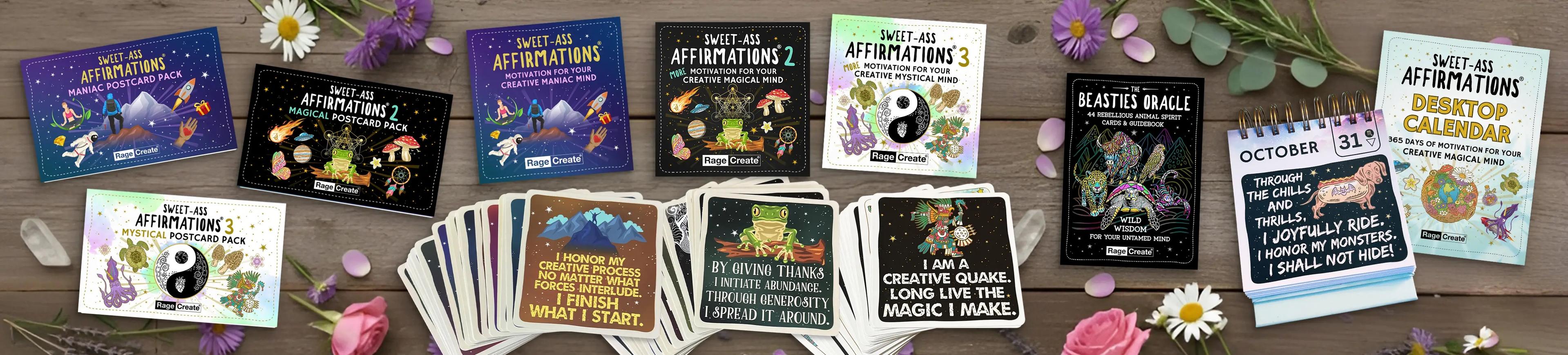
One oracle deck might focus entirely on messages from goddesses. Another might be animal spirit guides. Another might be—shameless plug—irreverent affirmations designed to make you snort-laugh while receiving cosmic wisdom.
Every oracle deck is its own self-contained universe with its own logic, its own symbols, and its own vibe.
Learning Curve: Who’s Easier to Master?
Tarot: The Deep Dive
Learning tarot is a commitment. Those 78 cards each have traditional meanings—upright meanings, reversed meanings, relationships to other cards, elemental associations, numerological significance.
It’s absolutely learnable (millions of people have done it), but it requires study. Most tarot practitioners spend months or years developing fluency with the cards.
The payoff? Incredible depth. Once you know tarot, you can read any tarot deck anywhere and interpret complex multi-card spreads with nuance.
Oracle: Immediate Access
Oracle cards are infinitely more accessible out of the gate. Each deck comes with its own guidebook explaining what every card means. You don’t need prior knowledge—just willingness to engage.
You can buy an oracle deck tonight and do meaningful readings immediately. The learning happens through use rather than study.
The tradeoff? Each deck requires its own familiarization. Your skill with one oracle deck doesn’t automatically transfer to another the way tarot knowledge does.
Reading Style: How They Feel Different
Tarot Readings
Tarot readings tend to be more analytical and narrative. Cards interact with each other through suits, numbers, and positions, creating layered stories.
“The Five of Pentacles next to The Star suggests you’re experiencing material hardship, but hope and healing are emerging. The reversed Emperor in the outcome position indicates a need to release rigid control.”
Tarot excels at complex, multi-faceted questions and situations that require nuanced exploration.
Oracle Readings
Oracle readings are often more direct and intuitive. Cards deliver clear messages that speak directly to your situation without requiring complex interpretation.
“Trust the timing. What feels like delay is actually alignment.”
Oracle decks shine for daily guidance, affirmations, and quick clarity checks. They meet you where you are without requiring a PhD in esoteric symbolism.
When to Use Each: Practical Applications
Reach for Tarot When:
- You want to explore complex situations with multiple layers
- You’re asking about timing, sequences, or how things unfold
- You enjoy analytical thinking and rich symbolism
- You want a system you can deepen over years of practice
- You’re reading for others and want established meanings
Reach for Oracle When:
- You want quick, accessible daily guidance
- You’re new to card-based divination
- You prefer intuitive over analytical approaches
- You want cards that match specific themes (love, abundance, creativity)
- You want positive affirmations and encouragement
- You enjoy collecting decks with different aesthetics and themes
Can You Use Both? (Spoiler: Hell Yes)
Many practitioners—including us—use both tarot and oracle cards, often in the same reading.
Tarot for the situation, Oracle for the message: Use tarot to explore what’s happening, then pull an oracle card for the spiritual guidance or affirmation you need.
Oracle as a daily pull, Tarot for deep dives: Use oracle cards for quick morning guidance and save tarot for weekly or monthly in-depth readings.
Oracle to clarify tarot: If a tarot card feels confusing, pull an oracle card to illuminate its message.
Learn more about combining methods in our 15 Oracle Card Spreads for Daily Guidance & Deep Dives.
So Which Should YOU Choose?
Choose Oracle Cards If:
- You want to start practicing immediately without study
- You prefer clear, direct messages over complex symbolism
- You want something specifically themed (affirmations, goddesses, animals, etc.)
- Daily quick guidance is your goal
- Structure and tradition feel limiting rather than supportive
If this sounds like you, check out Best Oracle Decks for Beginners: Start Your Practice Right.
Choose Tarot If:
- You enjoy learning systems and deepening knowledge over time
- Complex, layered readings appeal to you
- You want a skill that transfers across all decks
- You’re interested in historical and esoteric traditions
- Structure and established meanings feel supportive
Choose Both If:
- You want flexibility in your practice
- You love collecting beautiful decks
- Different moods call for different tools
- You’re a creative maniac who doesn’t like being boxed in (hi, we see you)
Frequently Asked Questions
Are oracle cards easier than tarot?
For beginners, yes. Oracle cards require no prior knowledge—each deck is self-contained with its own guidebook. Tarot has a learning curve because you’re studying a traditional system with established meanings.
Can I learn tarot if I started with oracle cards?
Absolutely. Many people start with oracle cards to build confidence and intuition, then add tarot later. The skills complement each other beautifully.
Which is more accurate?
Neither is inherently more accurate. Accuracy depends on your connection to the deck, your skill as a reader, and how you frame your questions. Both tools are equally valid.
Do oracle cards have reversed meanings?
It depends on the deck and your preference. Some oracle decks include reversed interpretations in their guidebooks; others suggest reading all cards upright. Unlike tarot, there’s no universal rule—do what feels right to you.
The Bottom Line
Oracle cards and tarot cards are both powerful tools for self-reflection, guidance, and connecting with your intuition. One isn’t “real” divination while the other is fake. They’re just different approaches to the same goal: having a meaningful conversation with yourself (and maybe the universe).
Pick the tool that calls to you. Or pick both. There are no wrong answers here, creative maniac—only your journey to explore.
Ready to dive deeper into oracle decks? Head back to our Ultimate Guide to Oracle Decks or explore How to Use Oracle Decks: A No-BS Beginner’s Guide.
Related Articles
→ The Ultimate Guide to Oracle Decks
→ Best Oracle Decks for Beginners
→ 15 Oracle Card Spreads for Daily Guidance & Deep Dives
→ How to Use Oracle Decks: A No-BS Beginner’s Guide
→ The Best Oracle Decks for 2026
Shop our collection of oracle decks and affirmation cards at ragecreate.com/collections/affirmation-oracle-decks