Affirmation Cards for Couples: Build a Shared Language Your Relationship Actually Needs

Affirmation Cards for Couples: Build a Shared Language Your Relationship Actually Needs
Most couples communicate about logistics — who is picking up groceries, what time dinner is, whether the electric bill got paid. The deeper stuff — values, fears, creative dreams, personal growth, emotional needs — gets discussed during arguments or not at all. Affirmation cards for couples create a daily, low-pressure ritual that keeps the deeper conversation alive without requiring a therapy session or a two-hour state-of-the-relationship meeting.
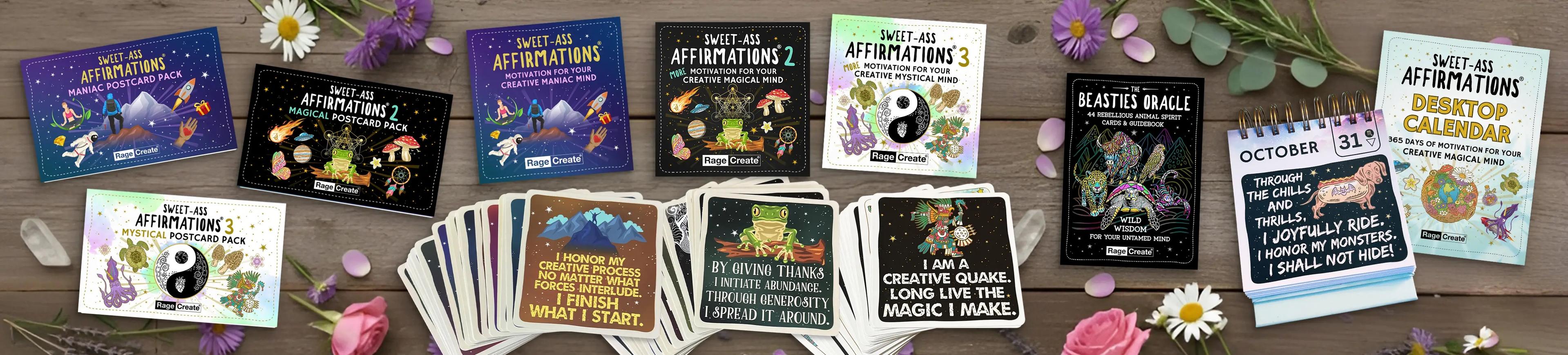
Rage Create has heard from couples who pull Sweet-Ass Affirmations cards together over morning coffee and describe it as the single best habit they have added to their relationship. Heath Armstrong, co-founder of Rage Create, designed the Sweet-Ass Affirmations decks to fuel individual creative practice, but the cards have become an unexpected relationship tool — because when two people share their internal worlds through a daily card ritual, emotional intimacy deepens faster than either of them expected.
This guide covers why affirmation cards work for couples, specific shared rituals, how to get a skeptical partner on board, and how the practice strengthens communication even when the relationship is already strong.
For the complete affirmation card ecosystem, visit Rage Create's ultimate guide to affirmation cards.
Why Affirmation Cards Work for Relationships
Affirmation cards work for couples because they solve a specific communication problem: most people do not voluntarily talk about their internal emotional landscape unless prompted. The card acts as a neutral third object — something both partners respond to rather than directly interrogating each other about feelings. This reduces the defensiveness that often arises in direct emotional conversations and creates a structured opening for vulnerability.
Psychologist Claude Steele's self-affirmation theory explains part of the mechanism. When each partner affirms a core value through the card, their psychological defenses lower. In that more open state, they are more receptive to hearing their partner's response, more willing to share their own, and less likely to interpret the conversation as criticism or pressure. The affirmation primes both brains for connection rather than defense.
The shared ritual also creates what relationship researchers call a "positive sentiment override" — a pattern where the default interpretation of a partner's behavior skews positive rather than negative. Couples who share daily positive rituals build this override faster than couples who only connect over logistics and problem-solving.
Five Couple's Affirmation Card Rituals
The Morning Parallel Pull
Each partner pulls one card from the same deck. Read your card aloud to each other. No commentary required — just hearing your partner affirm something positive about themselves or their mindset creates a moment of witnessed vulnerability. If time allows, spend one minute each discussing what the card means to you today. This takes three to five minutes and becomes a daily touchpoint that most couples describe as the best part of their morning.
The Shared Card Discussion
Pull a single card together. Read the affirmation. Then both partners discuss what it means to them individually and what it means for the relationship. The same affirmation will resonate differently for each person, and those differences reveal aspects of your inner worlds that normal conversation misses. This practice builds empathy because it teaches each partner how the other processes and interprets the same information.
The Date Night Deck
Keep a Rage Create deck at your dinner spot — the kitchen table, your favorite restaurant, wherever you have regular date nights. Pull three cards and use them as conversation prompts. What does each card bring up? What resistance does it trigger? What would change if both partners fully believed the affirmation? The cards replace the "how was your day" loop with something that actually generates insight and connection.
The Appreciation Anchor
After the card pull, each partner shares one specific thing they appreciate about the other — something from the last 24 hours. The affirmation card opens the emotional channel, and the appreciation statement anchors the practice in the relationship. Over time, this trains both brains to scan for things to appreciate about the partner throughout the day (the RAS at work), which shifts the default relationship lens from critical to appreciative.
The Conflict Recovery Card
After a disagreement — once emotions have cooled — pull a card together. Read the affirmation. Let the card create a re-entry point to connection after the rupture. Do not use the card to bypass the conflict or avoid accountability. Use it to signal that the conflict is over and the relationship is resuming. This ritual becomes especially powerful when both partners understand that pulling the card means "I am choosing us" — even after a fight.
How to Get a Skeptical Partner On Board
Not everyone immediately embraces affirmation cards, and pressure is the fastest way to guarantee your partner will never touch the deck. Here is how to introduce the practice without friction.
Start with your own practice. Pull a card every morning. Do the See It, Say It, Feel It method for yourself. Do not invite, explain, or evangelize. Let your partner observe the practice and get curious on their own terms. Curiosity is a far more powerful motivator than instruction.
Use the lunchbox method. Slip a card into your partner's bag, briefcase, or lunchbox with no explanation. The surprise element engages their novelty detection system, and the affirmation arrives without any social pressure to perform a ritual. If they mention it, great. If not, they still read it.
Suggest a low-commitment trial. "Let's try pulling one card together with coffee for a week and see if we like it" is a much easier sell than "we should start a daily affirmation practice." One week. One card. With coffee. Most partners will agree to that, and most will want to continue after the week ends.
Choose the right deck. A partner who would never touch a soft, ethereal affirmation deck might immediately connect with Rage Create's Sweet-Ass Affirmations because the humor makes the practice feel fun rather than clinical. The bold, irreverent tone gives the cards personality that both partners can engage with — including the partner who thinks affirmation cards are "too woo woo."
For help choosing, read how to choose the right affirmation card deck.
What Couple's Affirmation Practice Is Not
Transparency matters. Affirmation cards for couples are a communication and connection tool. They are not a substitute for couples therapy, relationship counseling, or professional intervention when a relationship is in crisis. If you and your partner are experiencing significant conflict, communication breakdown, trust violations, or emotional abuse, please work with a licensed couples therapist. Affirmation cards work best as a daily maintenance practice that strengthens an already-functioning relationship or as a complementary tool alongside professional support.
The cards also should never be weaponized. Using an affirmation to make a passive-aggressive point ("maybe YOU should read this one") defeats the purpose of the practice and damages trust. The card pull is a shared act of vulnerability, not a corrective tool aimed at your partner.
Frequently Asked Questions
Do affirmation cards help relationships? Yes. Affirmation cards for couples create daily opportunities for shared vulnerability, emotional communication, and positive ritual — all of which research associates with stronger relationship satisfaction. The cards provide a structured prompt that opens deeper conversations without the pressure of direct emotional interrogation. The self-affirmation mechanism also lowers defensiveness, making both partners more receptive to each other.
Can we use any affirmation card deck as a couple? Any deck works, but decks with bold, humor-driven content tend to generate more engaging couple discussions than soft, generic decks. Rage Create's Sweet-Ass Affirmations are particularly popular for couple's use because the irreverent tone gives both partners something to react to — laughter, surprise, and strong opinions are better conversation fuel than bland agreement.
How often should couples pull affirmation cards together? Daily practice produces the strongest results, but even three to four times per week creates meaningful impact. The key is regularity. A shared card ritual that happens predictably — every morning with coffee, every Sunday at brunch — builds the positive sentiment override that research associates with relationship resilience.
Pull a Card Together Tomorrow Morning
You already share a coffee. Share a card with it. Sixty seconds of witnessed vulnerability over a morning pull creates more genuine connection than most couples achieve in a week of logistics conversations.
Rage Create's Sweet-Ass Affirmations decks are built for exactly this kind of shared practice — bold enough to spark real conversation, funny enough to make the ritual enjoyable, and deep enough to reveal something new about your partner every single day.
Return to the ultimate guide to affirmation cards. Explore the morning ritual in affirmation cards for your morning routine. Want to add journaling to your couple's practice? Read affirmation cards and journaling. Discover all the benefits in benefits of affirmation cards.