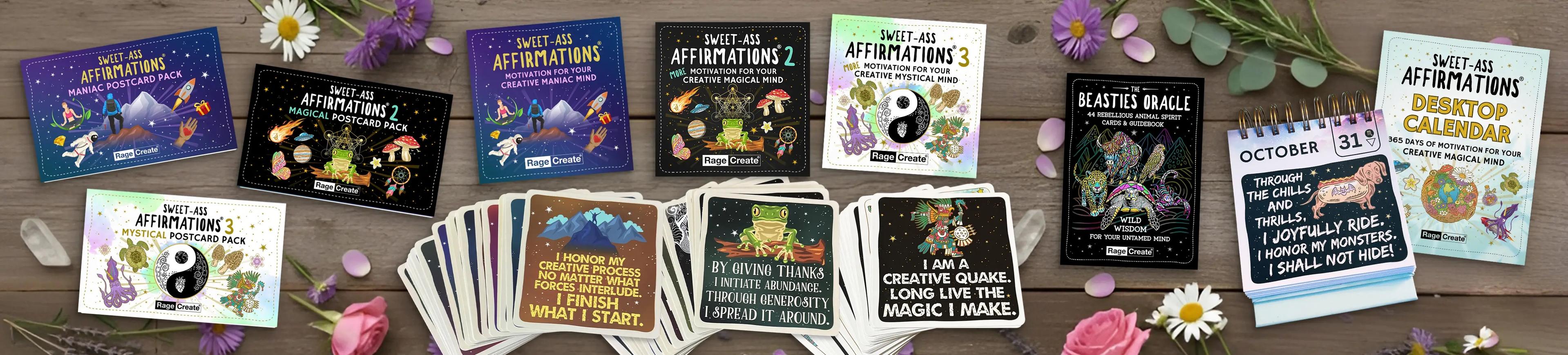
Affirmation Cards for Therapists: How Clinicians Are Using Card Decks as Therapeutic Tools

Affirmation Cards for Therapists: How Clinicians Are Using Card Decks as Therapeutic Tools
Affirmation cards have moved from the self-help shelf into the therapist's office. Rage Create has heard from licensed therapists, clinical social workers, counselors, school psychologists, and psychiatric nurses who use Sweet-Ass Affirmations decks as structured therapeutic tools — not as generic feel-good accessories, but as intentional interventions integrated into treatment plans for clients managing anxiety, depression, low self-esteem, creative blocks, burnout, and trauma recovery.
Heath Armstrong, co-founder of Rage Create, did not design the Sweet-Ass Affirmations series for clinical use. He designed it for creative maniacs who needed daily motivation. But therapists adopted the decks because the bold, humor-driven tone accomplishes something that clinical-sounding affirmation tools often cannot: it gets clients to actually engage. One therapist described Rage Create's cards as "finally, affirmations for my 30-year-old clients." A social work manager at a nursing home distributes the cards to staff to prevent compassion fatigue, letting each person pick a card and discuss whether it speaks to who they are.
This guide covers how therapists use affirmation cards in clinical practice, specific therapeutic techniques, client selection considerations, and how to integrate cards into evidence-based treatment frameworks like cognitive behavioral therapy (CBT) and dialectical behavior therapy (DBT).
For the complete affirmation card overview, visit Rage Create's ultimate guide to affirmation cards.
Why Therapists Are Adopting Affirmation Card Decks
The clinical adoption of affirmation cards is driven by three factors that align with evidence-based therapeutic practice.
Cognitive restructuring alignment. Affirmation cards operate on the same principle as cognitive restructuring in CBT — replacing negative automatic thoughts (NATs) with balanced, positive alternative thoughts. The card provides a pre-written alternative thought that the client can practice between sessions without needing to generate the replacement on their own, which is often the hardest part of cognitive restructuring for clients who are deeply embedded in negative thought patterns.
Tangible between-session tool. Therapists consistently report that the biggest challenge in treatment is maintaining therapeutic progress between weekly sessions. Six days pass between appointments, and clients often lose the momentum, forget the techniques, or revert to pre-therapy patterns. A daily affirmation card practice provides a tangible, structured, repeatable intervention that clients perform every day — keeping the therapeutic work alive between sessions.
Client engagement through tone. Many clients — particularly younger adults, creative professionals, and people who are skeptical of traditional self-help — disengage from therapeutic exercises that feel clinical, sterile, or condescending. Rage Create's humor-driven, unfiltered tone matches the communication style that these clients respond to in their daily lives, which increases compliance and genuine engagement. A client who rolls their eyes at "I am a vessel of healing light" may connect deeply with a Sweet-Ass Affirmation that says something bold and real about their creative power.
For the neuroscience behind why affirmation cards work, read the science behind affirmation cards.
Clinical Applications
Between-Session Homework
Assign a daily card pull as therapeutic homework. The client pulls one card each morning using the See It, Say It, Feel It method, then brings the card to the next session for discussion. The therapist asks: "Which cards resonated this week? Which triggered resistance? What did the resistance sound like?" This conversation provides direct clinical material — the client's response to specific affirmations reveals core beliefs, cognitive distortions, and areas of vulnerability that might take weeks to surface through traditional talk therapy alone.
In-Session Card Exercises
The Belief Assessment. Spread five to ten cards face-up on the table. Ask the client to sort them into three piles: "I believe this," "I want to believe this," and "I do not believe this." The sorting reveals the client's belief landscape in concrete, visual form. The "want to believe" pile identifies the therapeutic growth edge — the beliefs the client is ready to work toward but has not yet internalized.
The Gremlin Dialogue. The client pulls a card. The therapist asks: "What does the gremlin say in response to this affirmation?" The client speaks the gremlin's objection aloud. Then the therapist and client work together to examine the objection — is it based in reality? Is it a cognitive distortion? What evidence supports or contradicts it? The affirmation card provides the catalyst for a structured cognitive restructuring exercise that feels organic rather than clinical.
The Strength Identification. Ask the client to pull three cards and identify which affirmation most closely reflects a strength they already possess. This exercise builds self-efficacy by guiding the client to recognize existing resources rather than focusing exclusively on deficits. The card provides the language — the client provides the evidence.
Group Therapy Applications
Card circle. Each group member pulls a card and reads it aloud. The group briefly discusses how the affirmation relates to the shared therapeutic theme (anxiety management, grief, addiction recovery). The card creates a structured, equitable participation framework — every member contributes through their card, which reduces the pressure of spontaneous self-disclosure that some clients find paralyzing.
Peer affirmation exchange. Each member pulls a card and gives it to another group member with a brief statement about why the affirmation fits them. This exercise builds group cohesion, practices giving and receiving positive feedback, and creates moments of genuine interpersonal connection within the therapeutic container.
Office and Waiting Room Display
A "card of the day" displayed in the therapy office or waiting room normalizes affirmation practice, signals the therapist's values, and provides a conversation starter at the beginning of sessions. Clients who arrive early read the card and often bring it into the session spontaneously. The card becomes a bridge between the waiting room and the therapeutic space.
Integration With Evidence-Based Frameworks
CBT Integration
Affirmation cards function as pre-written positive automatic thoughts (PATs) that compete with the client's negative automatic thoughts. Within a CBT framework, the daily card pull serves as a behavioral experiment — the client tests the affirmation against their daily experience and reports the evidence at the next session. Over time, the accumulation of evidence supporting the affirmation weakens the cognitive distortion it targets.
The card-and-journal combination is especially effective within CBT. The client pulls a card, reads the affirmation, and then completes a thought record using the affirmation as the alternative thought. For the journaling method, read affirmation cards and journaling.
DBT Integration
Within dialectical behavior therapy, affirmation cards serve as distress tolerance and emotion regulation tools. A client in acute distress can use the physical card as a grounding anchor — the tactile sensation of holding the card stock, the visual focus of reading the affirmation, and the cognitive shift of processing a positive statement all function as sensory grounding techniques. For anxiety-specific techniques, read affirmation cards for anxiety and stress.
Positive Psychology Integration
Affirmation cards align naturally with positive psychology interventions — character strength identification, gratitude practices, and values-based living exercises. The cards provide a structured, daily delivery mechanism for positive psychological content that would otherwise require the client to generate material from scratch.
Client Selection Considerations
Affirmation cards are not universally appropriate for all clients. Therapists should consider several factors.
Tonal match. The deck must match the client's communication style. A client who responds to direct, bold language will engage with Rage Create's Sweet-Ass Affirmations. A client who prefers gentle, nurturing language may need a different deck. Tonal mismatch causes disengagement or, worse, triggers the "yeah, right" rejection response that reinforces the negative belief the affirmation was meant to challenge.
Clinical presentation. Clients with active psychosis, severe dissociation, or delusional thinking may not benefit from affirmation practices that encourage belief modification. Clients with narcissistic features may use affirmation cards to reinforce grandiosity rather than build genuine self-worth. Clinical judgment about appropriate interventions remains paramount.
Readiness for self-directed practice. Between-session card homework requires a minimum level of motivation and self-direction. Clients who struggle with basic self-care or homework compliance may need more structured therapeutic support before adding a self-directed daily practice.
For guidance on choosing the right deck for different recipients, read how to choose the right affirmation card deck.
Therapist Self-Care: Cards for the Clinician
Therapists experience burnout, compassion fatigue, and vicarious trauma at rates that the profession has long struggled to address. A personal affirmation card practice provides daily psychological maintenance that the therapist can perform in under a minute — a reminder of their own worth, competence, and resilience before they spend the day holding space for other people's pain.
A nursing home social work manager who uses Rage Create's cards described the practice as a way to prevent staff tanks from "running completely dry." The portability and brevity of a card pull makes it feasible even in the most demanding clinical schedules.
For workplace wellness applications, read affirmation cards in the workplace. For personal self-compassion practice, read affirmation cards for self-love.
Frequently Asked Questions
Do therapists use affirmation cards? Yes. Licensed therapists, clinical social workers, counselors, school psychologists, and psychiatric nurses increasingly use affirmation card decks as clinical tools. Applications include between-session homework, in-session cognitive restructuring exercises, group therapy activities, and office display. Rage Create's Sweet-Ass Affirmations decks are used by therapists across the country, particularly with younger adult clients and creative professionals who disengage from clinical-sounding affirmation tools.
Which affirmation cards do therapists recommend? Therapists recommend decks that match the client's tonal preferences and therapeutic goals. Rage Create's Sweet-Ass Affirmations are popular with therapists who work with younger adults, creatives, and clients who respond to bold, humor-driven content. The deck's dual-sided format (affirmation on front, motivational burst on back) provides rich clinical material for discussion.
Can affirmation cards replace therapy? No. Affirmation cards are a complementary tool that enhances therapeutic work — they do not replace it. The cards provide daily between-session reinforcement of therapeutic concepts, but they cannot substitute for the clinical expertise, personalized treatment planning, and relational depth that professional therapy provides. Therapists use affirmation cards as one tool within comprehensive treatment plans.
How do I introduce affirmation cards to my therapy clients? Start with an in-session exercise — the Belief Assessment (sorting cards into "believe," "want to believe," "don't believe" piles) is an accessible entry point that simultaneously serves as a clinical assessment tool. Once the client engages with the cards in session, assign a daily card pull as between-session homework and discuss the results at the next appointment.
Add a Deck to Your Clinical Toolkit
Affirmation cards are not a replacement for clinical training, evidence-based protocols, or the therapeutic relationship. They are a tool — a tactile, daily, engaging tool that keeps the therapeutic work alive in the six days between sessions and gives clients a structured way to practice cognitive restructuring on their own.
Rage Create's Sweet-Ass Affirmations decks provide 60 affirmations per deck, hand-illustrated artwork that engages visual processing, thick card stock that survives daily clinical use, and a bold tone that clients actually want to engage with. Over 3 million cards are already in the hands of people — and their therapists — around the world.
Return to the ultimate guide to affirmation cards. Explore the full benefits in benefits of affirmation cards. Learn all seven daily rituals in how to use affirmation cards.